
Fire Protection Services Nottingham
When a fire breaks out, the protection built into your walls, floors and doors decides how far it spreads and how long people have to evacuate the building.
At FSS Midlands Ltd, we provide passive fire protection across Nottinghamshire, installing and maintaining those hidden safeguards to current UK fire regulations.
Fire Stopping
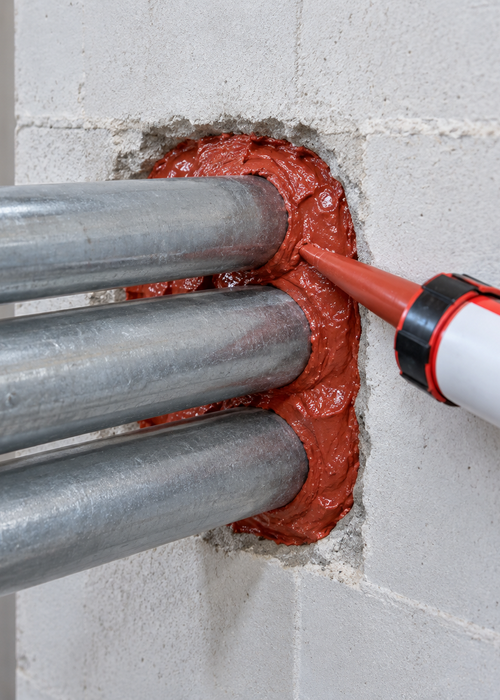
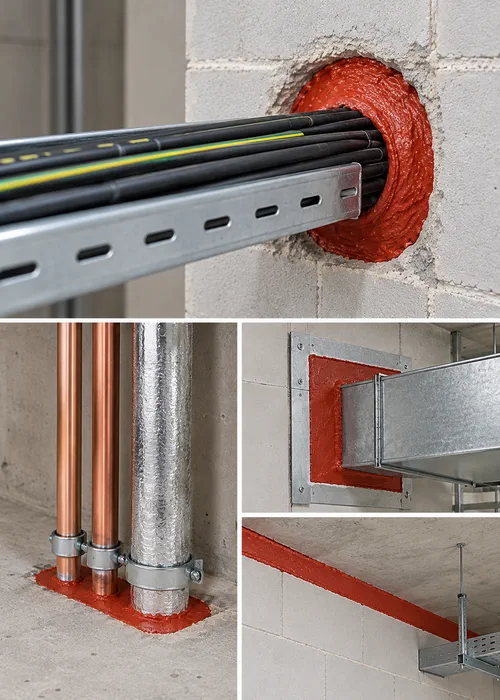
Fire stopping is the process of sealing the openings created when pipes, cables, ducts and other services pass through fire resisting walls and floors. Without it, even a small hole can let smoke and flames bypass a compartment wall and reach the next room, corridor or floor within minutes.
Our fire stopping in Nottingham covers service penetrations, linear gaps where walls meet floors or soffits, and the voids left behind after refits or new installations.
We choose from fire rated mastics, batt and compound systems, pipe wraps and sealants based on the size of the opening, the wall or floor type and the services passing through it, because every seal must follow a system tested for that exact situation.
- Penetrations around pipes, cables and ductwork sealed.
- Linear joints and head of wall gaps closed.
- Products matched to tested, approved standards.
- Ideal after refits, rewires or new mechanical installations.
Passive Fire Protection
The easiest way to understand passive fire protection is to compare it with active systems such as smoke alarms, sprinklers and extinguishers, which all need to detect a fire or be operated before they do anything. Passive measures are part of the structure itself, so they work from the day they are installed by dividing the building into sections that slow a fire down.
Because this protection sits behind plasterboard, above ceilings and inside risers, it is often forgotten until a fire risk assessment or an incident exposes the gaps.
We install and upgrade fire resisting boarding, encasements for steelwork and ducts, fire rated partitions and protective coatings, giving your building the level of fire resistance it was designed to have.
- Works without power, detection or human action.
- Divides buildings into fire resisting sections.
- Protects escape routes and structural elements.
Compartmentation Surveys / Remedial Works
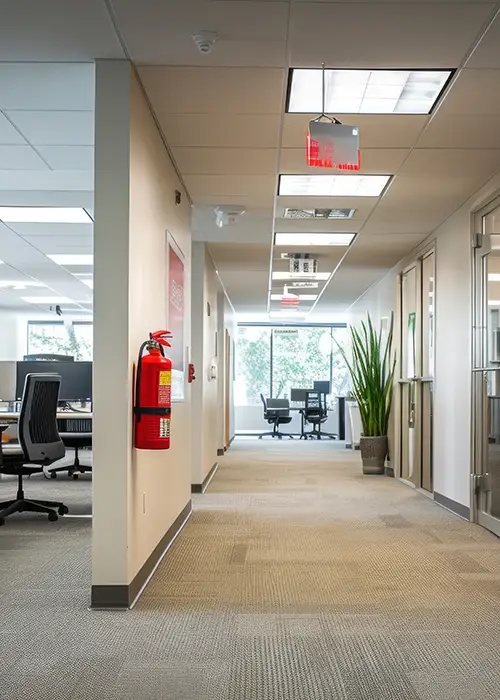
A compartmentation survey is a detailed inspection of the fire resisting walls, floors and ceilings that split your building into separate compartments. We look above ceilings, inside risers and along service routes to find breaches, missing fire stopping components and damaged construction that could allow fire to spread.
The process starts with the survey itself, where every defect is recorded and located so you have a clear picture of your building's condition. From there, we prioritise the findings, carry out the remedial works and recheck each repaired area, leaving your building properly sealed and divided into safe compartments once again.
- Inspection of hidden voids, risers and ceiling spaces.
- Every breach recorded with its location.
- Remedial works prioritised by risk.
- Repaired areas rechecked once complete.
Fire Door Inspections / Installations
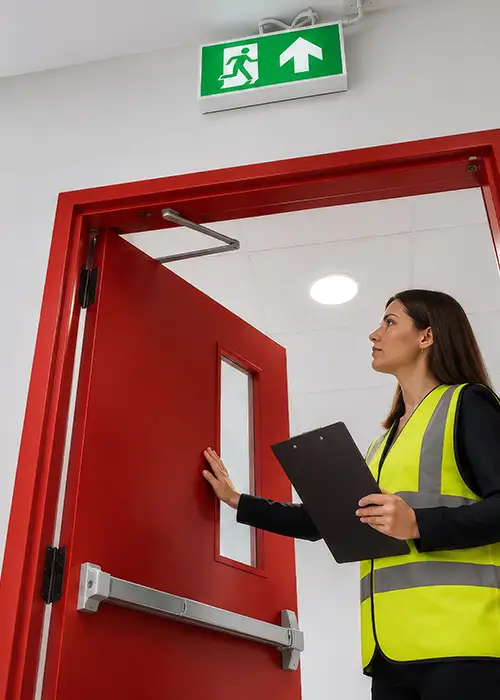
A fire door only protects people if every part of it works together, from the door leaf and frame to the hinges, seals and closer.
During an inspection, we check the gaps around the edges (typically between 2mm and 4mm), the condition of the intumescent strips and smoke seals, the hinges and ironmongery, any glazing, the certification label and whether the door closes fully into its frame on its own.
In residential buildings over 11 metres tall, the Fire Safety (England) Regulations 2022 require communal fire doors to be checked every three months, with reasonable efforts made to check flat entrance doors every year.
Where a new door is needed, we install certified fire door sets with matching frames, compatible ironmongery and correct gaps, following the manufacturer's instructions so the finished door performs as tested.
- Gaps, seals, hinges, closers and glazing checked.
- Certification and labelling confirmed.
- Clear findings on what passes and what needs attention.
- Certified door sets installed to manufacturer instructions.
Fire Door Repairs
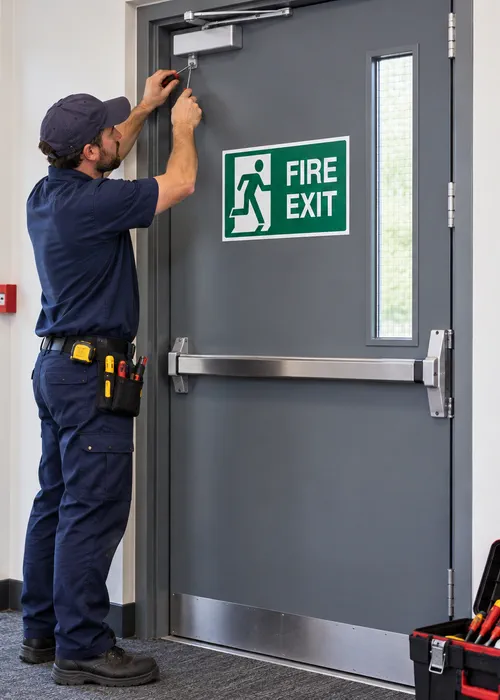
Many fire doors fail an inspection for reasons that can be put right without replacing the whole door. This service focuses on your existing doors, bringing damaged, worn or failing doors back up to standard.
Typical repairs include rehanging dropped doors, adjusting gaps, replacing worn intumescent strips and smoke seals, refitting or replacing closers and swapping unsuitable hardware for fire rated alternatives.
We use components that are compatible with the door's certification, and when a door is too damaged to repair safely, we fit a new certified door in its place.
- Dropped and sticking doors rehung and adjusted.
- Worn seals and intumescent strips replaced.
- Faulty closers and hardware repaired or replaced.
- Replacement doors fitted when a repair is not viable.
Commercial & Residential Projects
No two properties carry the same fire risks, so we plan every project around how your building is used and who occupies it. For commercial clients, that means working with landlords, managing agents, developers and main contractors to meet fire strategies, building control requirements and handover deadlines.
For residential properties (including rented homes), HMOs and blocks of flats, we focus on keeping residents safe and helping landlords meet their legal duties.
Mixed use developments (such as shops with flats above) need careful separation between the commercial and residential parts, and we plan our work around that boundary.
- Offices, retail units and industrial premises.
- Rented homes, HMOs and blocks of flats.
- Mixed use developments with shared structures.
- Work planned around occupants and site programmes.
Not Sure Which Service You Need?
Many buildings need a combination of these services, and the right starting point is not always obvious.
Call us on
07932 404 241
or email
to arrange a free site visit,
and we will talk through your building and recommend the most sensible next step.